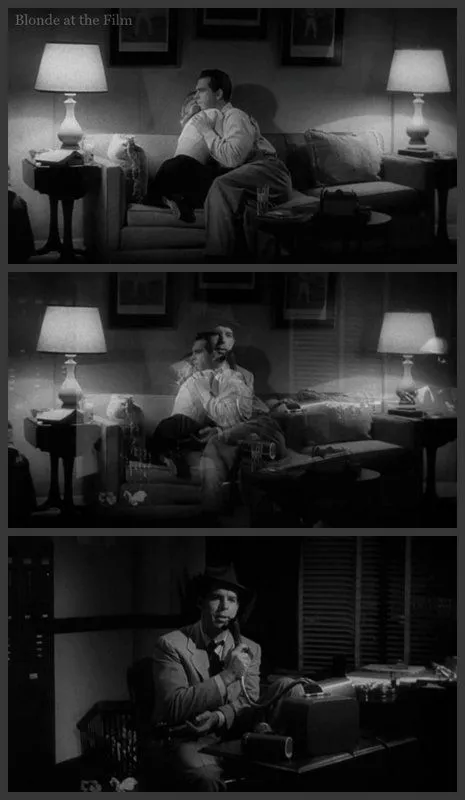
A requirement for my classical animation piece is that it must include at least one conceptual transition between keyframes. It is important that I first define what is considered a ‘conceptual transition’.
“When you jump from scene to scene in a film, or even between cuts, the way you transition can make or break a scene. Conceptually, transitions convey a passage of time, character movement, pauses, storylines, and silence.” (Bernstein, ND)
A conceptual transition uses an idea or item to move from one scene to another, guiding the audience through the narrative.
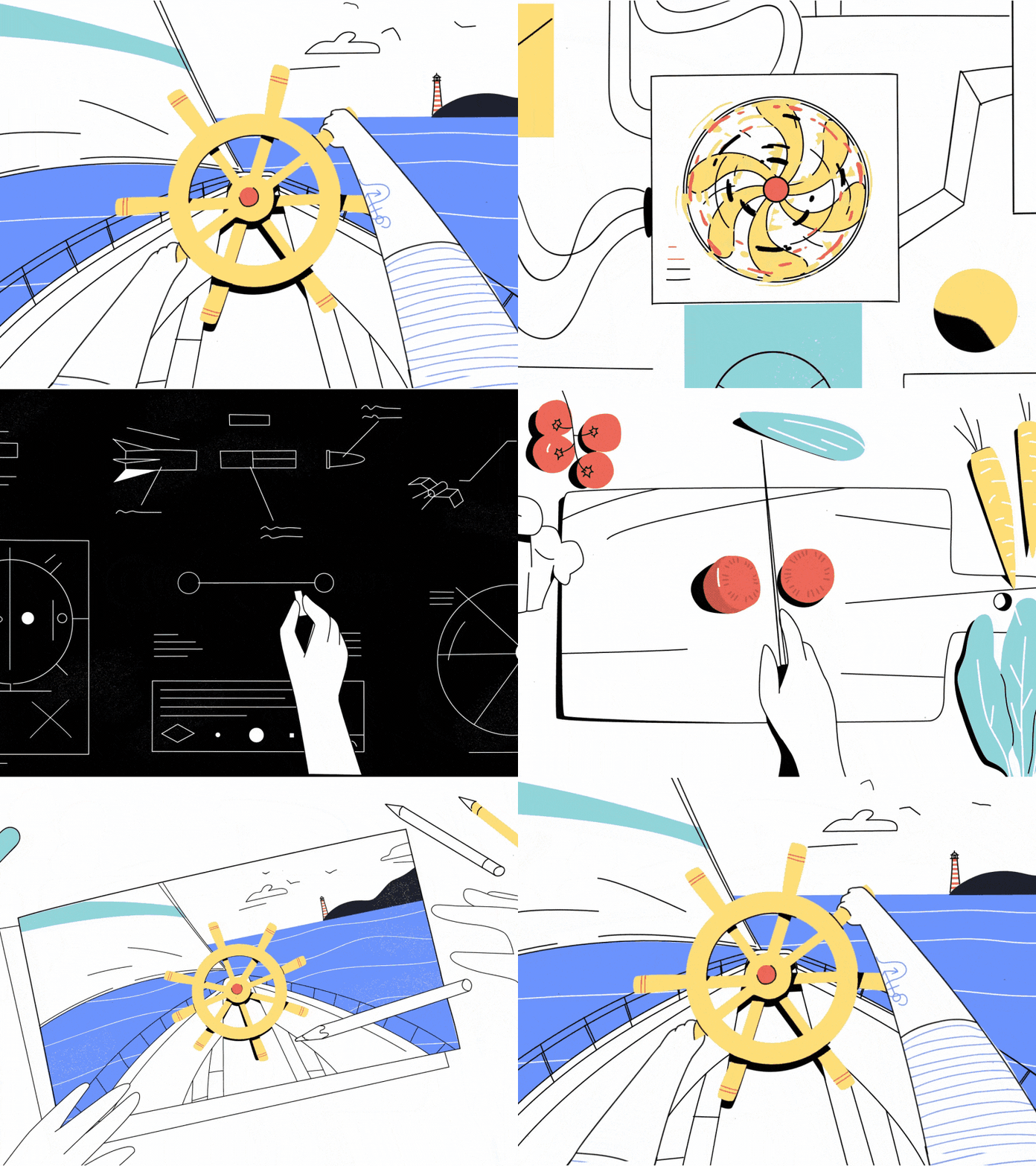
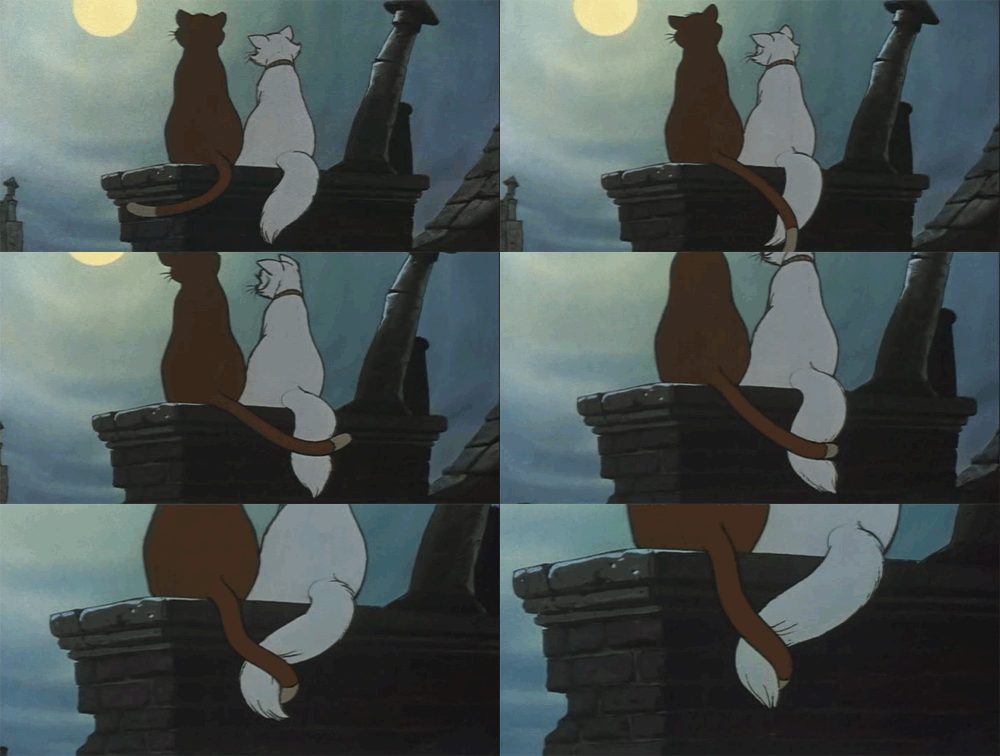
Conceptual transitions in animation using similar shaped forms.
In my animation I want to use similar shaped objects to form match cut transitions between scenes, like in the example above
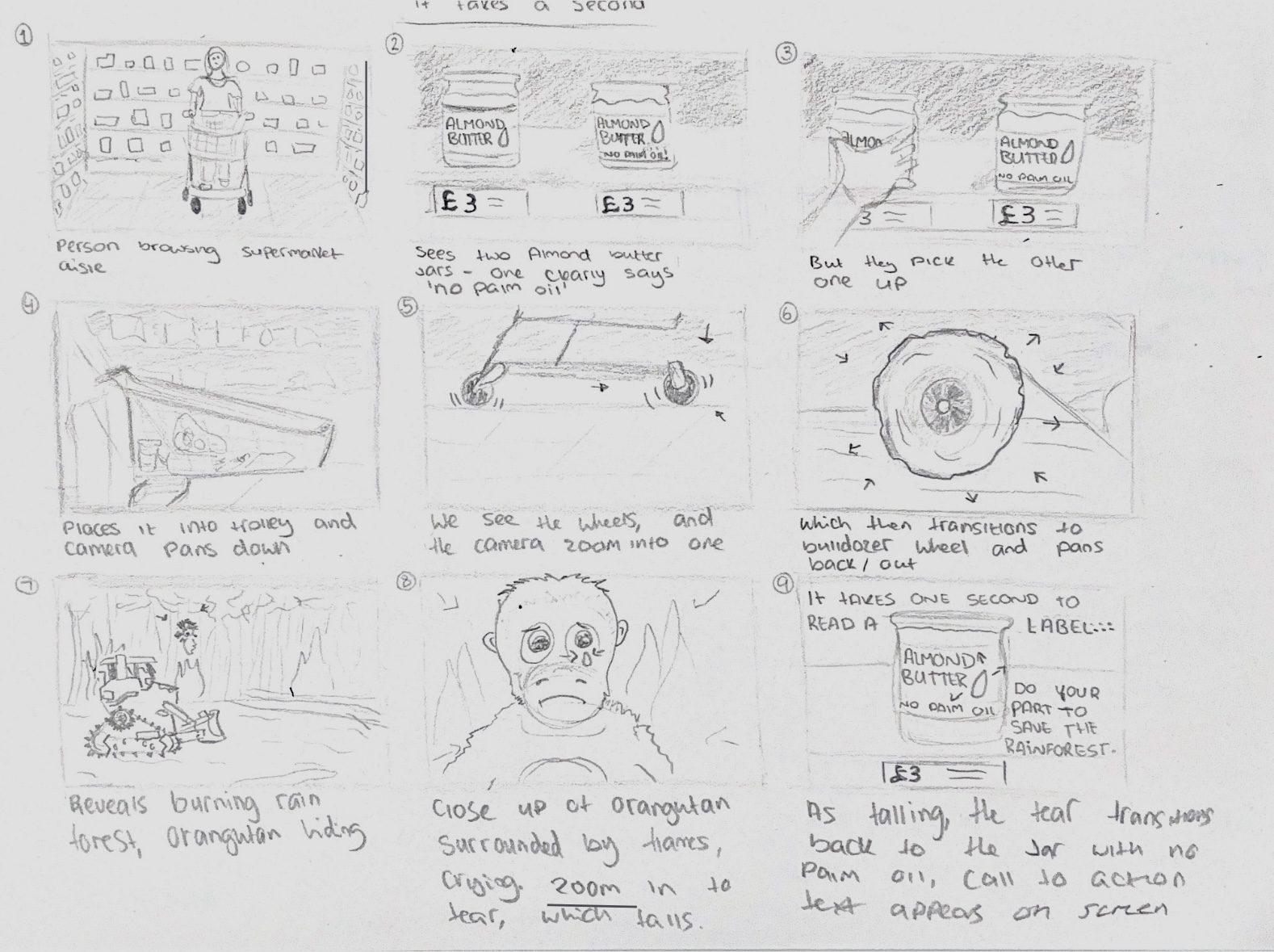
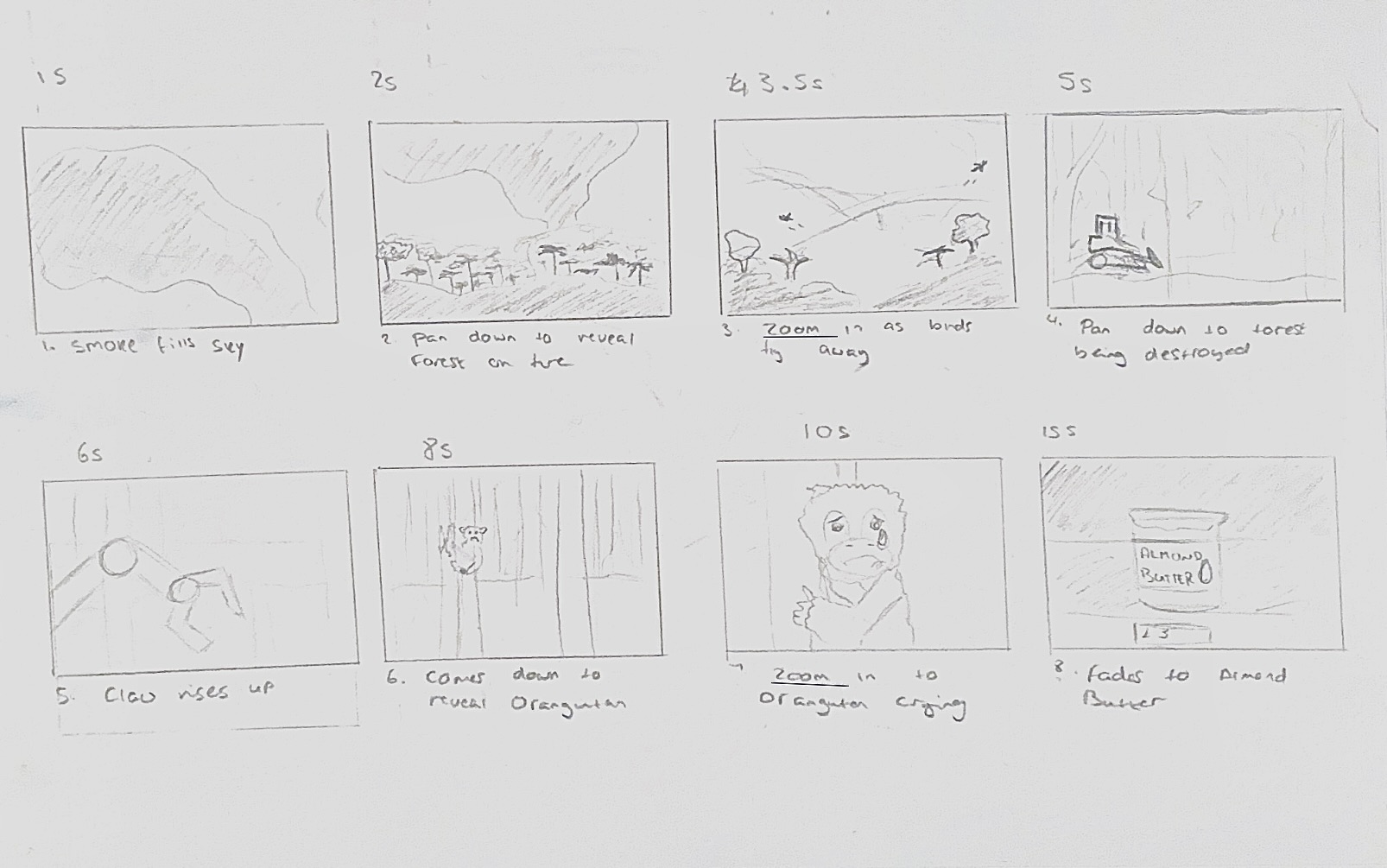
Initial storyboard for my animation.
This was my initial storyboard. My animation is called ‘It Takes A Second’. The plot follows a person shopping, and buying products with palm oil in, before transitioning to a burning rainforest where we see an orangutan engulfed by the flames, crying. The tears transition back to the palm oil-free almond butter jar, creating a conceptual transition due to the similar shape and form of the teardrop and the almond on the jar. Text then appears saying ‘it takes a second to read a label… Do your part to save the rainforests.’
The takeaway for my animation is that shoppers should take more consideration about how the products they are buying have been sourced, and how slight changes help contribute to a bigger cause.
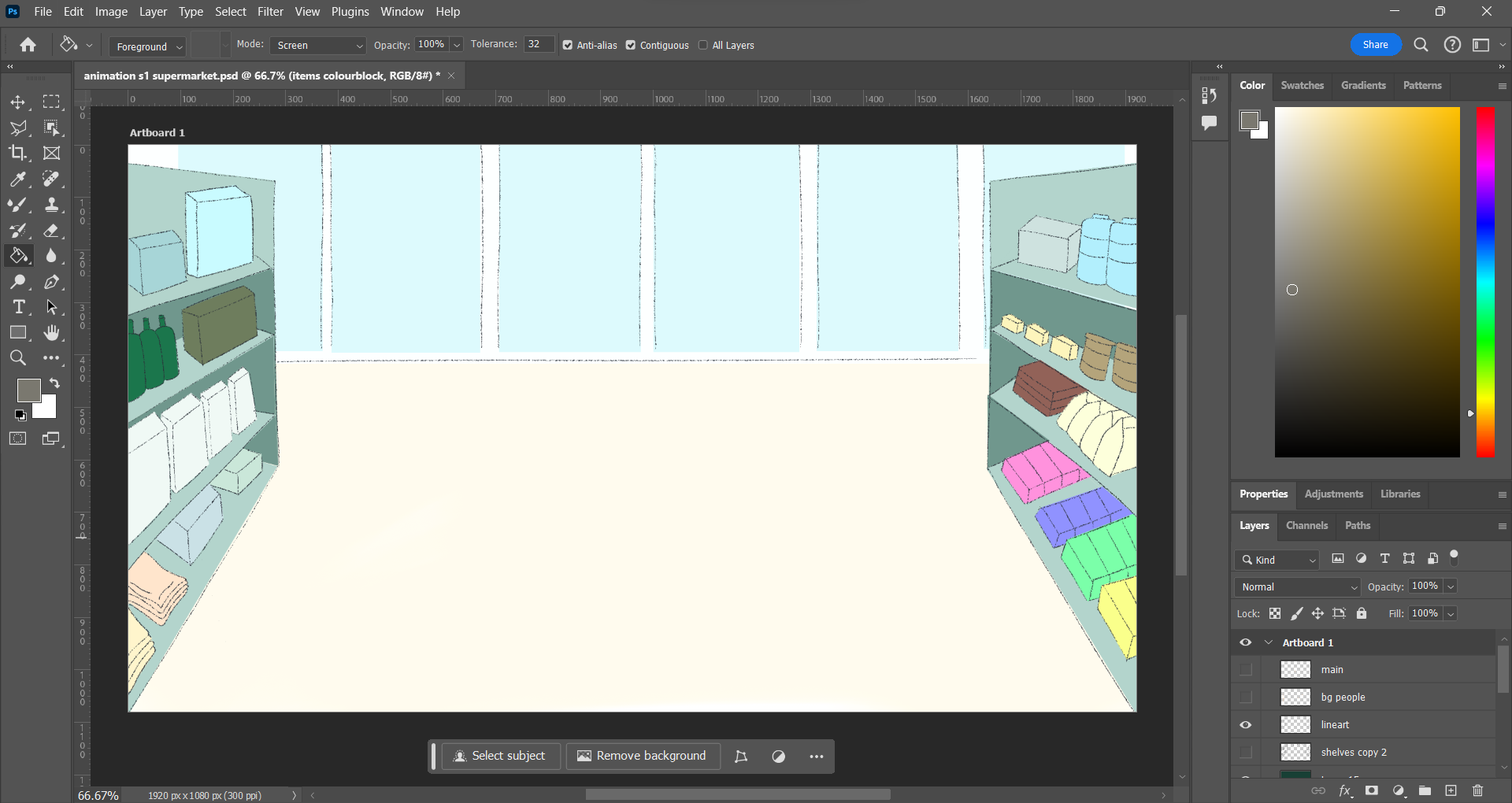
A screenshot of my initial animation, which was unsuccessful
When I tried to create my animation, I realised that by drawing skills limited me. I found it difficult to create the supermarket scenes and was unhappy with how it was turning out. This was frustrating and setting me back, so I decided to rethink my storyboard and have the animation take place mostly in the rainforest, cutting out the first few scenes in the supermarket. Now the animation begins by panning down the smoky treeline and zooming into the burning rainforest, where we then see the excavator tearing through the trees as the orangutan watches in horror, before its teardrop morphs into the almond on the spread jar.
My new storyboard which focuses more on the rainforest.
As a result, I was able to create a more concise story that was more impactful as there is more time spent in the rainforest, where we can see the destruction taking place. The animation ends the same as before, so the overall message stays the same, and it keeps the conceptual transition idea between the teardrop and the almond.
I also followed some online tutorials to help form the fading smoke clouds (referenced below).
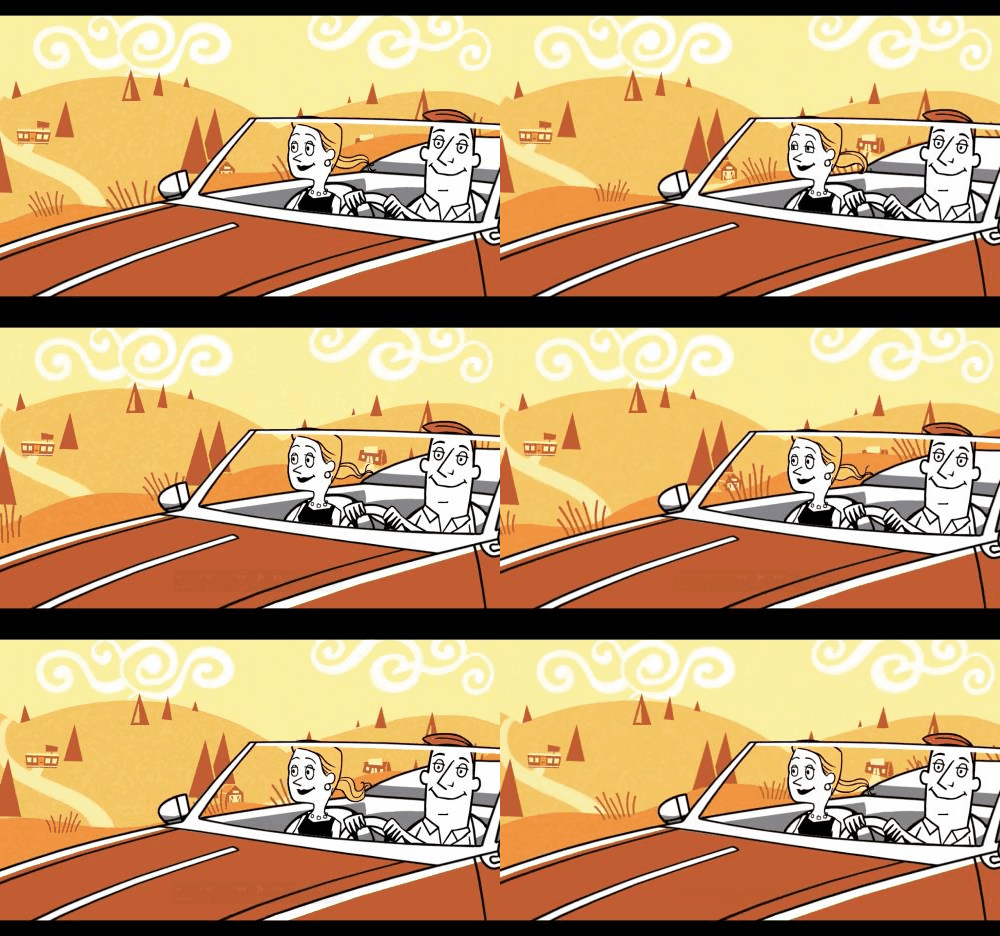
An example of multiplaning used in animation.
By using multiple layers and scaling, an illusion of depth is created within the animation.
Additionally, I have formed a multiplaning effect by moving the furthest layers at a slower speed than the frontmost layers. This is a technique used in a lot of classical Disney animations, and it is used to add dimension and movement to flat, 2D animations. This will compliment the flat vector style and add extra life to the scenes.
“The movement of objects that are close to the camera is emphasized, while the movement of objects that are far from the camera is de-emphasized.” (Gadea, nd)
References:
Berenstein, Steven (ND) Different Types of Film Transitions [Article]. Available online: https://www.adobe.com/creativecloud/video/discover/types-of-film-transitions.html [Accessed: 02/02/2024]
Disney (1970) The Aristrocats [GIF]. Available online: https://www.pinterest.co.uk/pin/64598575893909542/ [Accessed: 03/02/2024]
Gadea, William (ND) Multiplaning Magic: How Layers Add Depth to 2D Animation [Quote]. Available online: https://idearocketanimation.com/20009-multiplaning-animation-history/ [Accessed: 02/02/2024]
Henrik Host-Madsen (2017) Adobe Animate: Lab 23 – Smoke Effect [Video]. Available online: https://www.youtube.com/watch?v=jo28rB3gitA [Accessed: 17/02/2024]
Ilya, Buzinov (ND) Match Cut [GIF]. Available online: https://dribbble.com/shots/6192629-match-cut [Accessed: 02/02/2024]
Onorato, Amy (2021) Multiplaning Used in Animation [GIF]. Available online: https://idearocketanimation.com/20009-multiplaning-animation-history/ [Accessed: 02/02/2024]