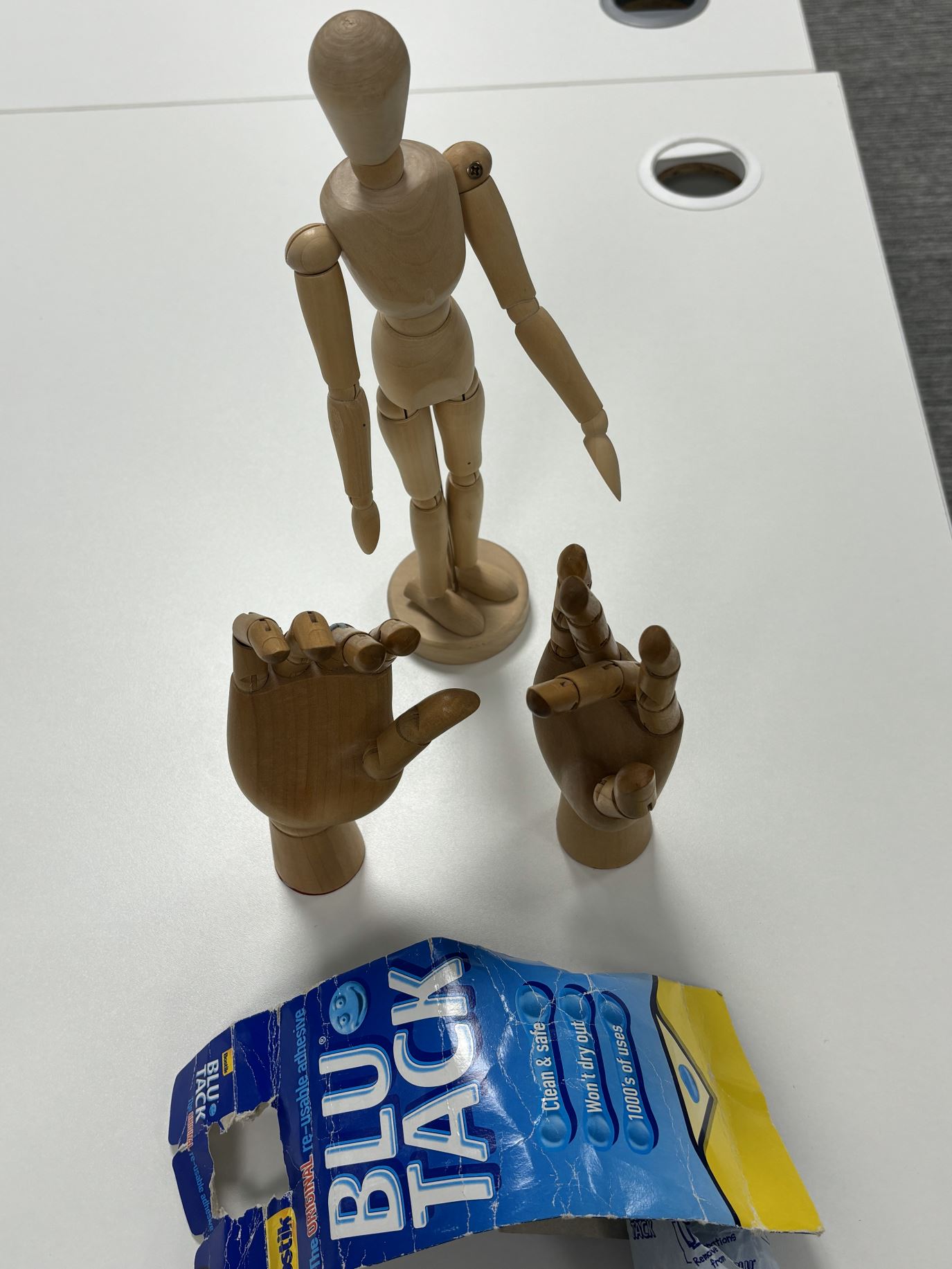
In class we were randomly assigned to teams of three and given the task of creating a stop motion animation with provided items. These items were a wooden mannequin and two wooden hand figures, as well as some Blu-Tack.
These are the objects we were provided with for the stop motion teamworking exercise
I was in a team with Lewis and Kieran. We first discussed ideas for how we could create a story with the provided items. We discussed some different ideas, but eventually settled on a scene where the figure kicks a ball, but it is saved by the two hands and the character is disappointed because of this.Because there were three points in the story, we decided to evenly distribute roles based upon this – meaning Kieran did the beginning section, I did the middle, and Lewis did the end.This meant that everyone had a fair contribution and input in the project
“With the right system for dividing the workload, you can increase the productivity of everyone on your team. This ensures that every employee is making the most progress on the task at hand while their productivity levels are high.” (Tryinch, nd)
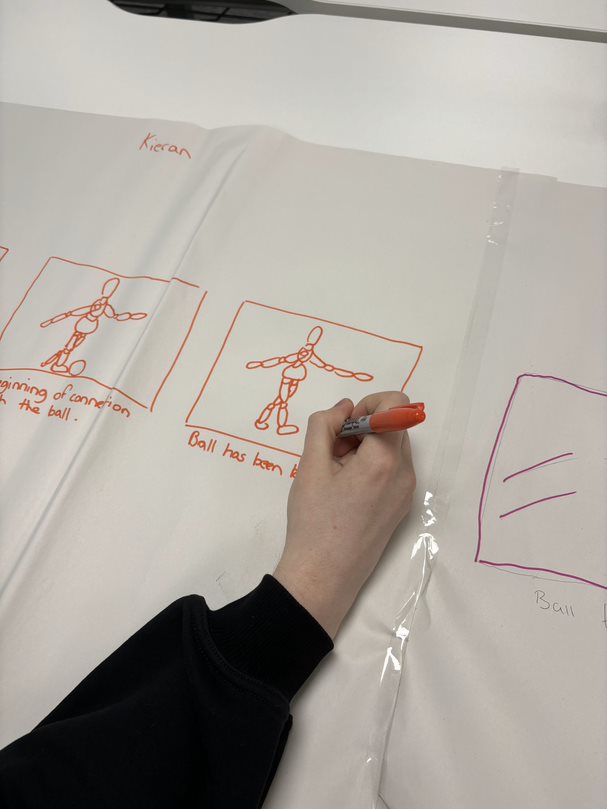
Kieran creating his part of the storyboard
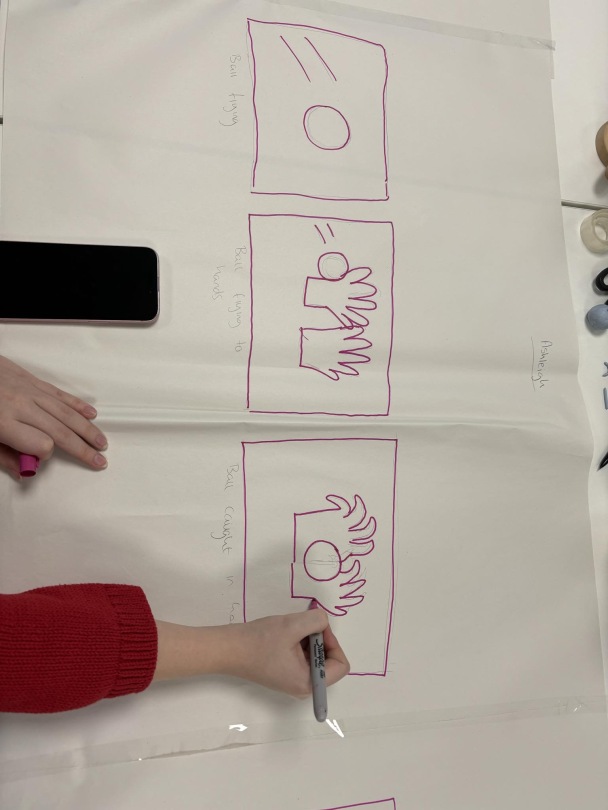
Me creating my part of the storyboard
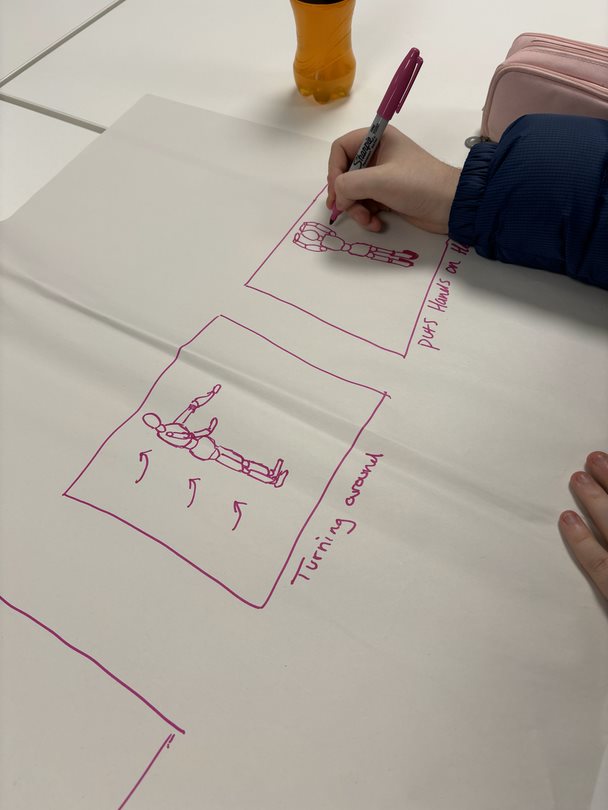
Lewis creating his part of the storyboard
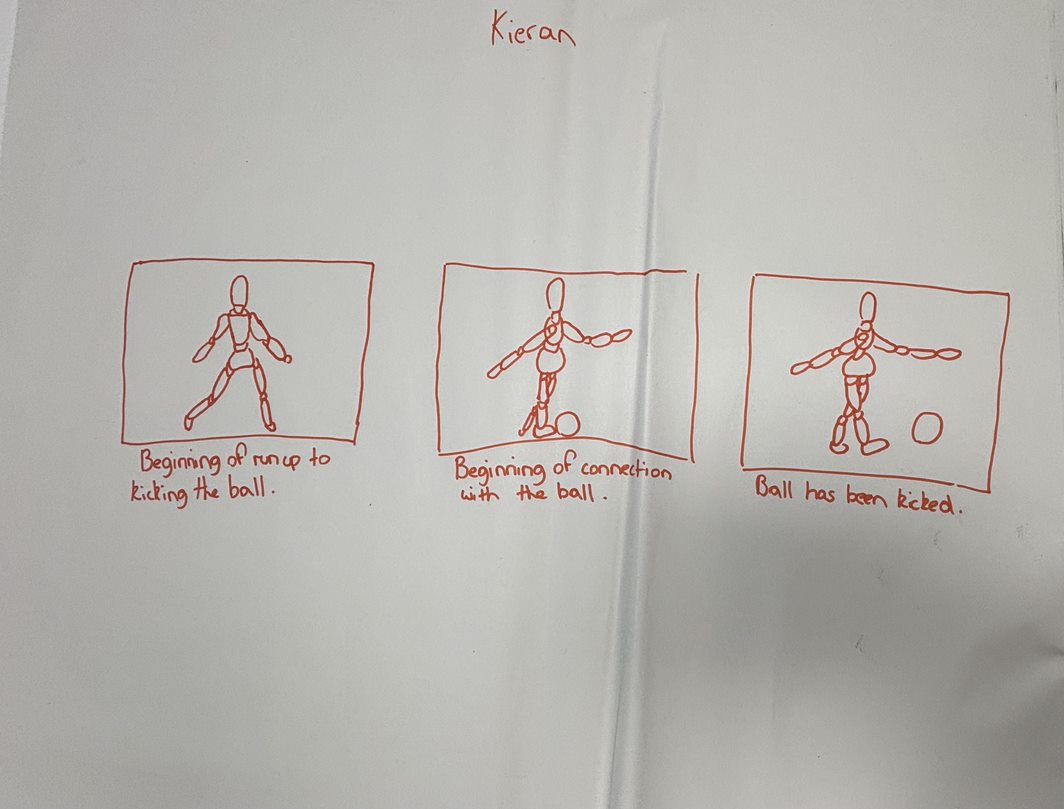
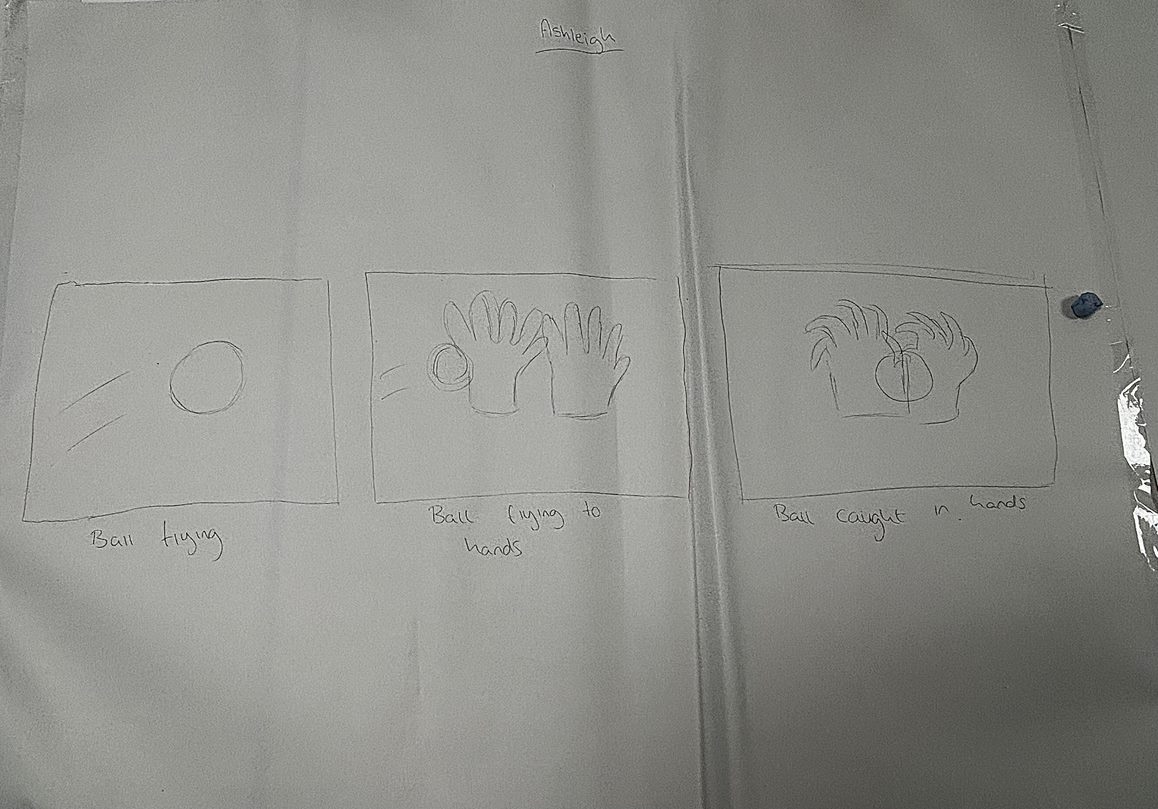
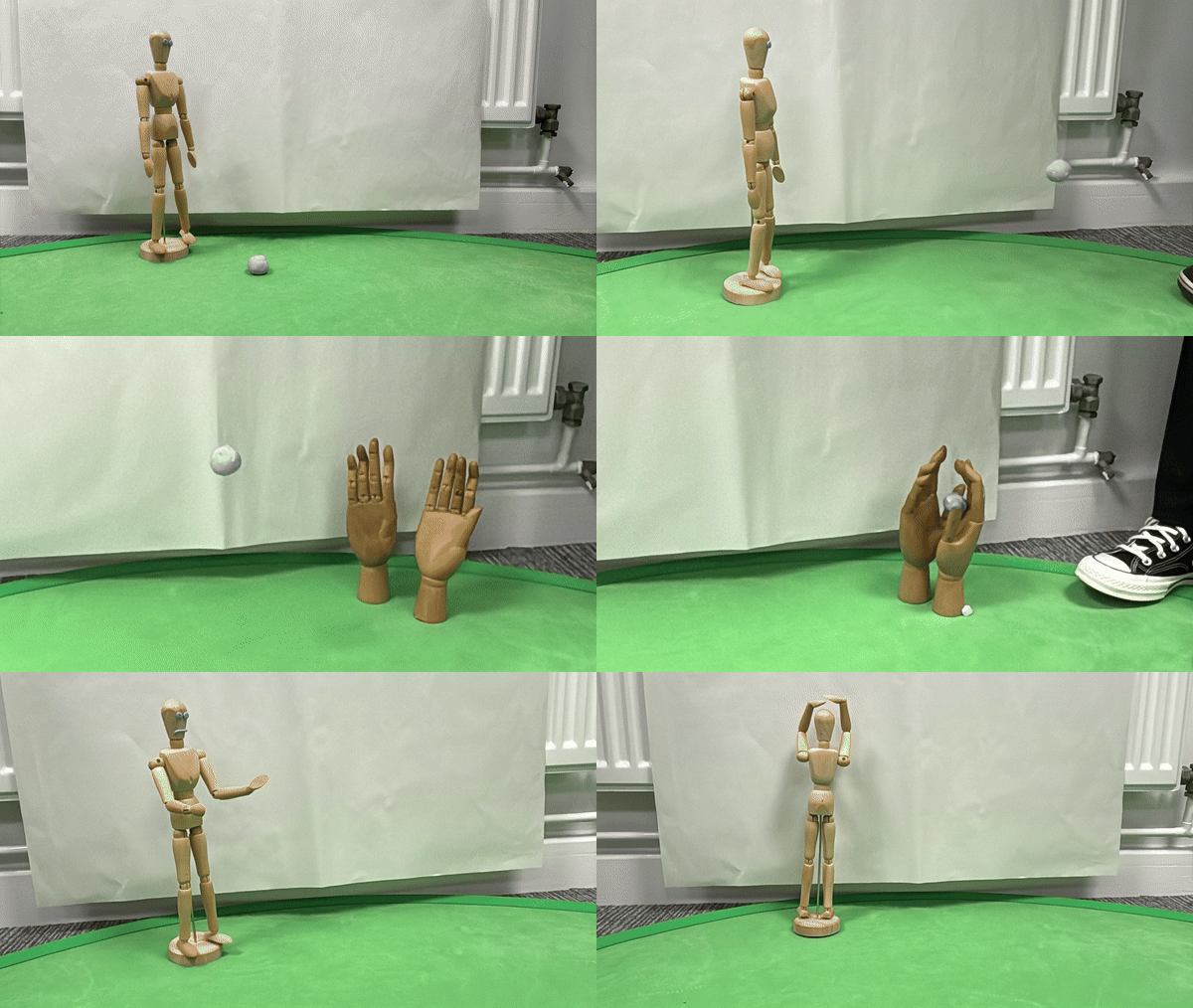
We began by working on our own portions of the storyboard. We all communicated how each section would play out, so the next person’s section would connect with the story following from the last person’ section, resulting in a cohesive and continuous narrative that made sense. For example, Kieran’s storyboard ended with the ball being kicked, so I began mine from this point with it flying. It was also Kieran’s suggestion to make the hands catch the ball, as I originally was going to use the hands on a side to form a goal, but his suggestion made a lot more sense.
Kieran's storyboard for the beginning of the animation
My storyboard for the middle of the animation
Lewis' storyboard for the end of the animation
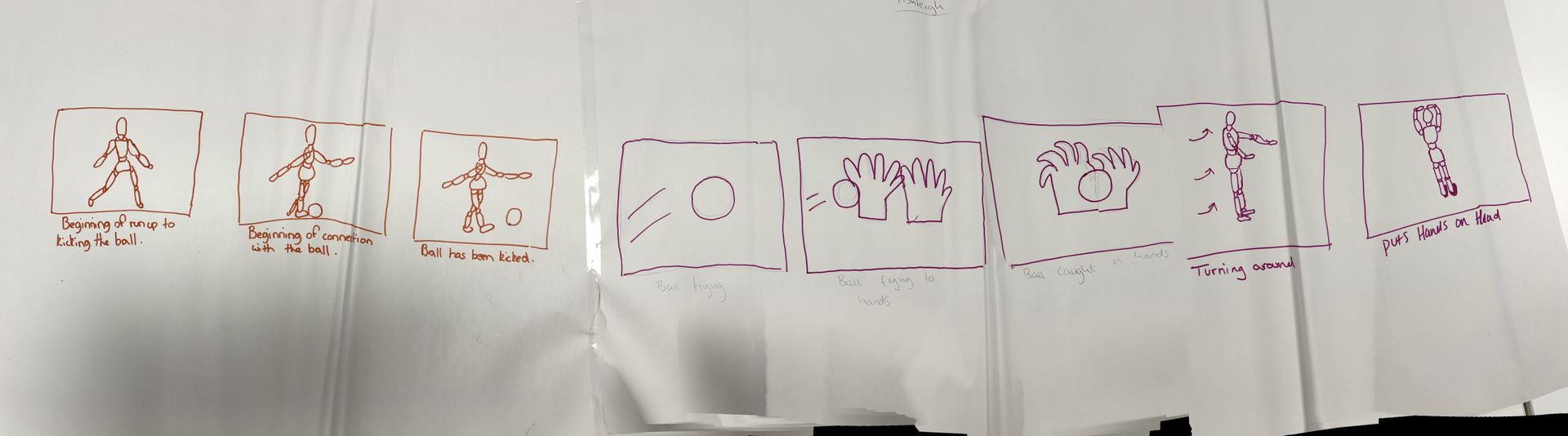
Panoramic image of the storyboard with everyone's sections
To create the ball, we used the Blu-Tac and some cello tape to make the ball look like it was floating. Lewis also used some leftover to form facial expressions on the character in his scene, to show they wereannoyed.
“Teamwork requires co-operation, co-ordination and communication between members of a team to achieve desired outcomes.” (Gluyas, 2015)
We then started to make the animation. I downloaded a stop motion app on my phone to record the sequence and we took turns positioning the items for our scenes whilst someone else took the images. This required communication as we had to direct the others on where to position the objects, so they were visible in the phone camera and so the animation would look as smooth as possible.
This is the app we used to create the animation
Our final stop motion animation created as a team
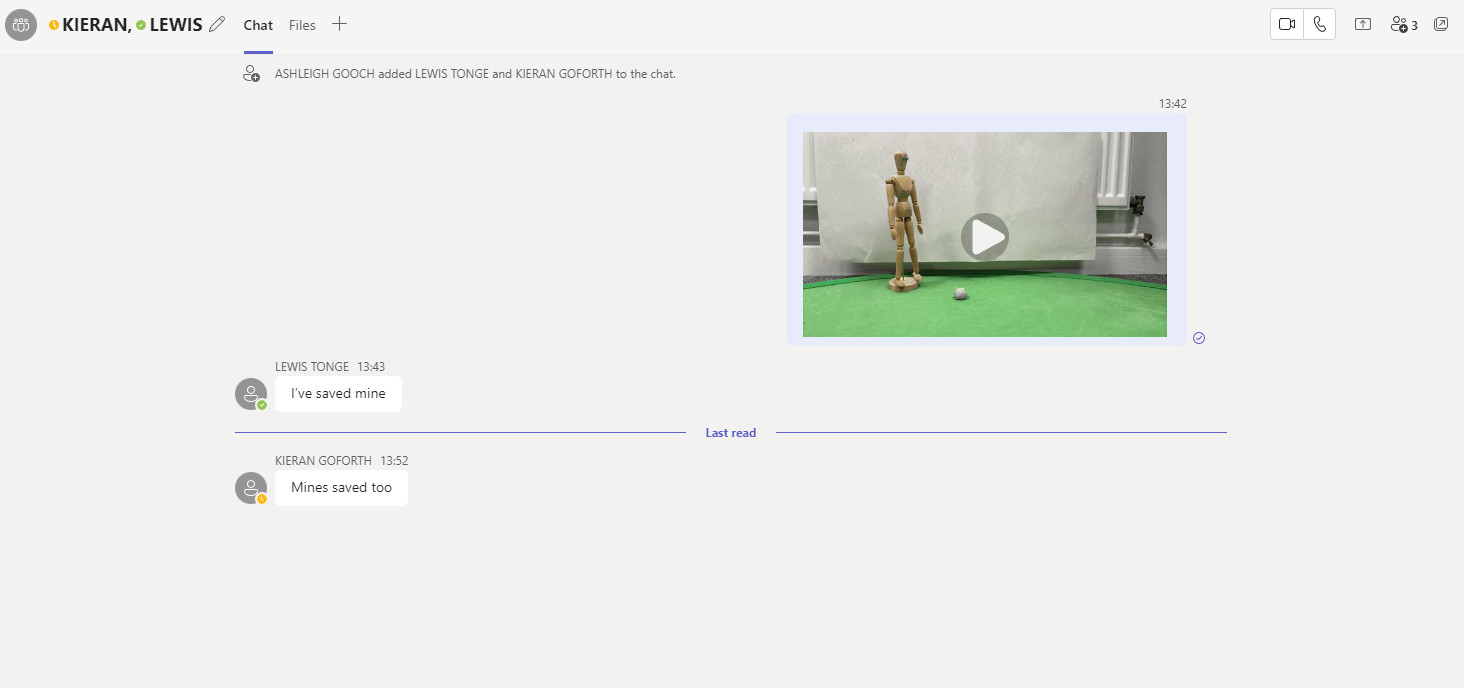
I then created a Teams chat and sent the exported video of our animation to the group, so everyone could see and access the work. To make sure that everyone had a copy, I asked Lewis and Kieran to message when they saved the video, ensuring that everyone was able to download it properly with no problems.
We made a Teams chat to make sure everyone had access to the final stop motion GIF of our animation
In conclusion, our group animation turned out to be successful. As a team, we worked well and were open and inclusive to ideas and suggestions. Everyone had an equal contribution to the project, and nobody was unfairly given too much work to do in comparison to other team members. Overall, it was a positive experience that provided a good outcome.
References:
Gluyas, Heather (2015) Effective communication and teamwork promotes patient safety [Journal]. Available online: https://journals.rcni.com/nursing-standard/effective-communication-and-teamwork-promotes-patient-safety-ns.29.49.50.e10042 [Accessed: 15/03/2024]
Tryinch (nd) What Is Work Distribution And Why Is It Important? [Article]. Available online: https://tryinch.com/blog/work-distribution/ [Accessed: 15/03/2024]