Research for Major Project
To begin my research, I first have analysed some existing apps which allow users to identify plants using object recognition technology. I looked at PlantNet and PictureThis – which were the top two app store search results under ‘Plant identifier’.
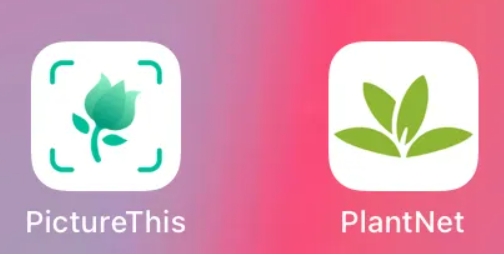
The first thing I noticed were the logos used for the app icons. Both are rather simple and generic, using plant iconography and shades of green. This works in relation to the subject, but they don’t feel very unique. I do prefer PictureThis though, as they have included the frame around the flower to convey the object recognition aspect, and they have flat gradients which appears more modern than the singular flat colour for PlantNet.
My own logo will likely use similar imagery and colour schemes, but I want to try and add something unique to my own brand to make it stand out against competitors in the same market. To do this, I will try to explore more abstract ideas and imagery for my logo, rather than going for the most direct or obvious choices such as a flower. I will also try to bring both the concept of ‘plants’ and ‘identity’ together to create a more conceptual design combining the two ideas.
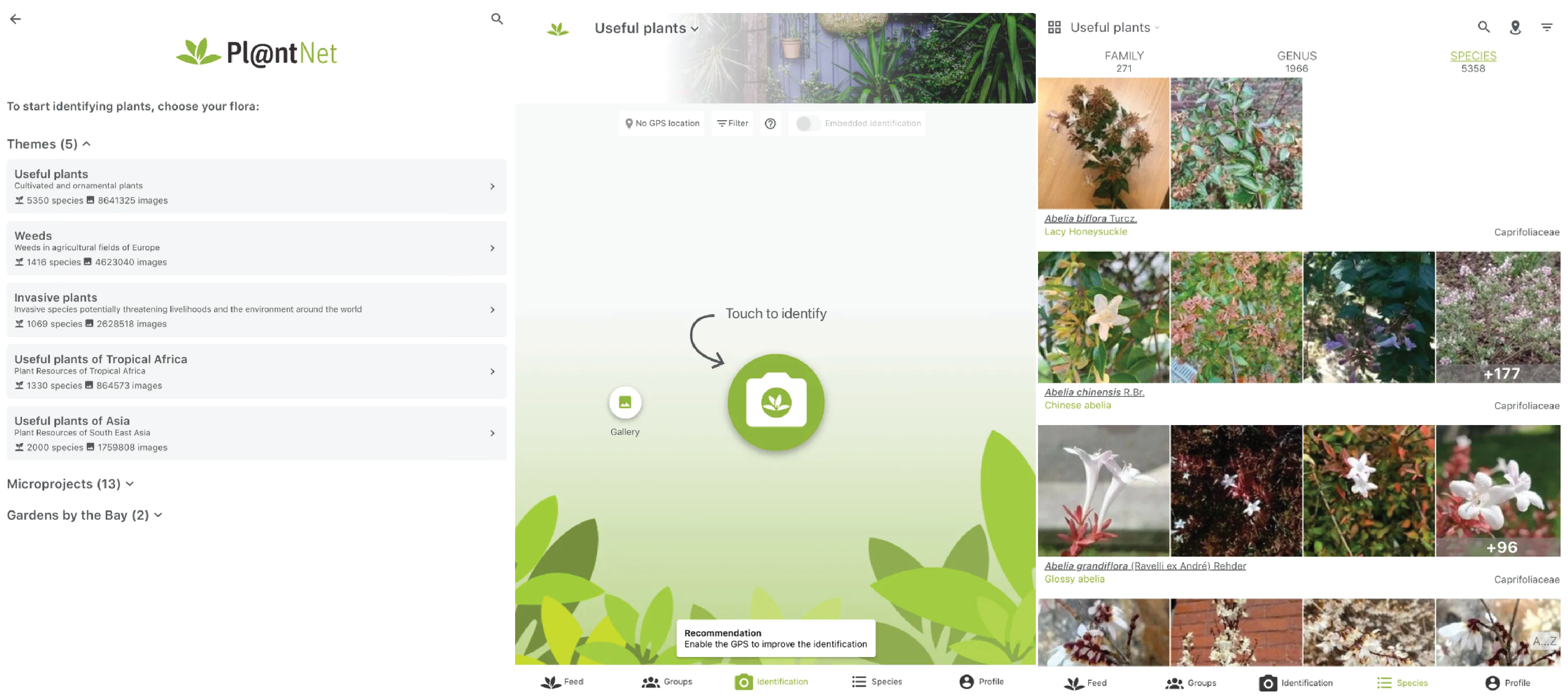
This is the interface for the PlantNet app. I think this UI is extremely outdated and is quite confusing to navigate as there are so many options presented at once, and not enough distinctive style choices to indicate specific features within the app. I think the app suffers from a lack of clear categorising and navigating, and that certain choices such as colour, imagery and hierarchy could be improved to enhance the UI / UX much more.
The use of a more modular grid causes the UI to suffer since it lacks variety and can be viewed as monotonous and overwhelming due to the lack of visual direction.
“Design represents a fundamental shift in competitive advantage,” he said. “Ten-plus years ago it was all about the code. Now it will be about the elegance of design as a first principle of software development.” (Levine, 2019)
Although the app is technically functional, it lacks the visual appeal which is evident in many modern app designs. Functionality alone just isn’t enough to support an app these days. Users seek a balance between functionality and usability, as well as visual appeal. Additionally, studies have revealed that 94% of first impressions are design-related (Sillence et al, 2004) and that users will decide in around 10 seconds whether or not to stay on a page – which means a high visual appeal is crucial.
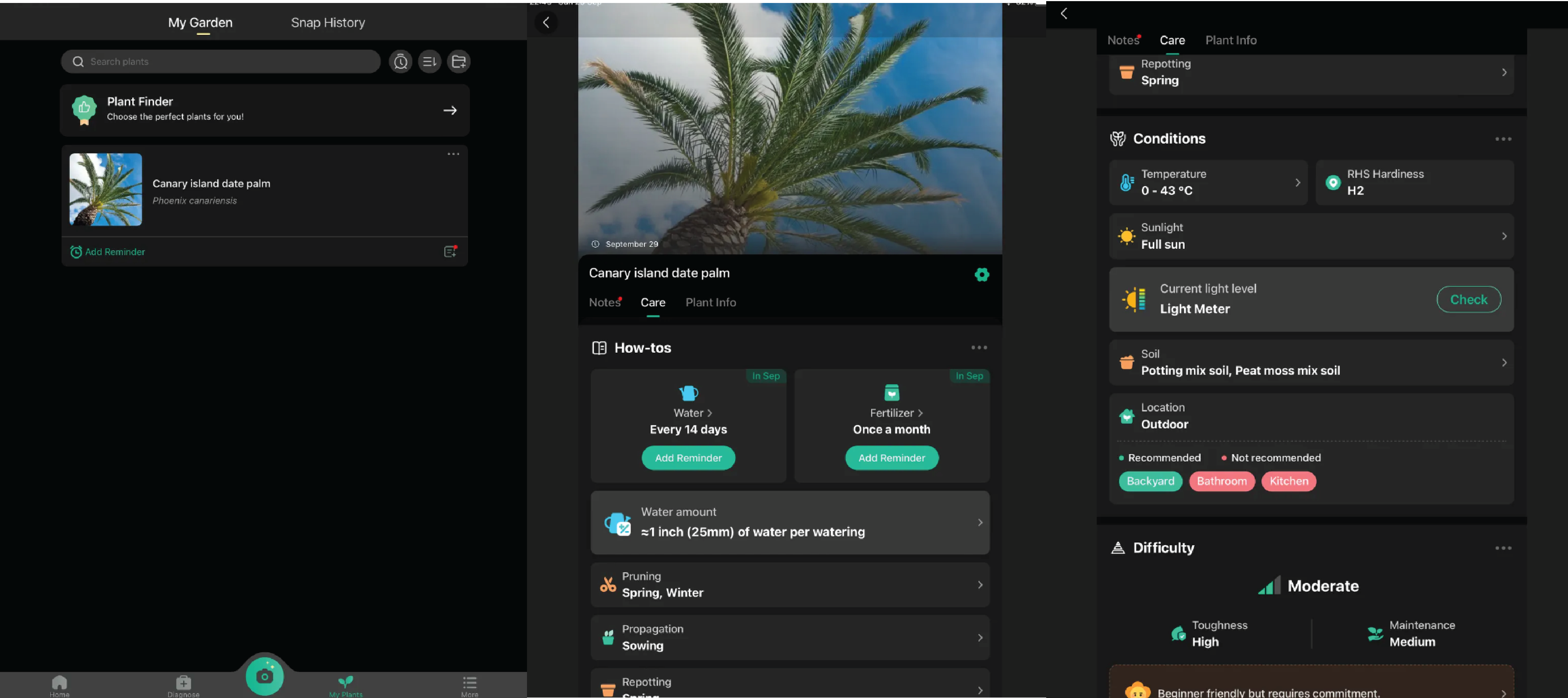
This is the interface for the PictureThis app. Right away this app looks more modern and is much easier to navigate due to it having better hierarchy through the use of colour, font-size/weight and icons. I really like the icons used to indicate specific conditions and ways to care for the plant, and I like how there is colour coding used for ‘recommended’ vs ‘not recommended’.
This app has also utilised the grid in a more hierarchal manner to fit in more sections and to break up information.
“A hierarchical grid is a flexible structure that allows for varying alignments and organization based on the visual hierarchy of the content. This grid type is especially useful when working with content that has varying levels of importance or complexity.” (UXPin, 2023)
However, I noticed that the app is primarily in dark mode. This is a good feature to utilise in app design, but there didn’t seem to be an option for a light mode. Good UX practice insists that you offer both choices to users – even though around 90% of users prefer dark mode, you cannot discriminate the other 10% who do not prefer it. It is overall better practice to provide users with a sense of agency to better suit their needs.
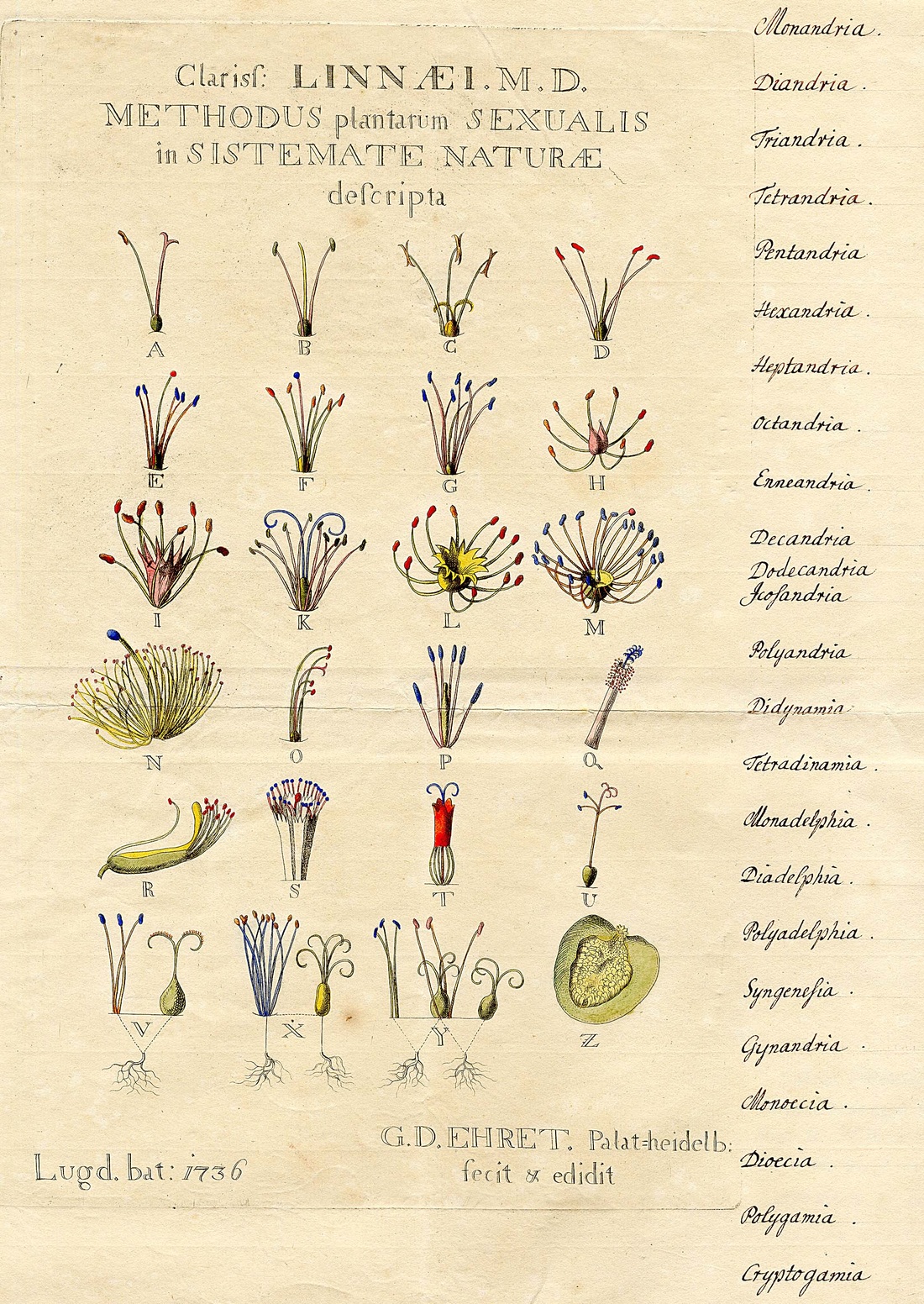
I have also began to research plant identification and classification. This lead to me looking into Carl Linnaeus and the Linnean system.
Carl Linnaeus, a Swedish biologist, was known for his discoveries in the field of biology. Refered to as ‘the father of Taxonomy, Linnaeus formed the Linnean system, a system which categorises different species into kingdoms, classes and ranks. Amongst these, Linnaeus divided the plant kingdom into 24 classes, which he formed based upon the reproductive parts of a plant. His work was extremely forefront but was majorly incorrect. His classification system was used well until the discovery of cells and microbial life within plants were made.
Now, we tend to class plants by two groups. Plants that produce seeds, and plants that do not. These can then be split into more groups and classes depending on climate, life cycle, roots and growing season (Bitesize, 2024).
Finally, as part of my app design, I want to implement an object recognition feature. Object / image recognition uses indexing to determine what the object is, based upon an existing recognition model / library.
One example of image based searching is Pinterest, which uses image recognition to search and index through a range of libraries online and offline to provide users with visually similar results.
“By utilizing its corpus of billions of objects, combined with its real-time object detector, Pinterest can understand images on a more fine-grained level. Now, it knows both the location and the semantic meaning of billions of objects in its image corpus.” (Le, 2018)
This is a feature I want to implement into my app design, so I will start to explore methods of object recognition and ways which I can demonstrate similar functions in my prototype.
Reference List:
Bitesize (2024) How to classify plants and animals [Article]. Available online: https://www.bbc.co.uk/bitesize/articles/zyt2jsg#zgqddp3 [Accessed: 21/10/2024].
Le, James (2018) Pinterest’s Visual Lens: How computer vision explores your taste [Article]. Available online: https://towardsdatascience.com/pinterests-visual-lens-how-computer-vision-explores-your-taste-5470f87502ad [Accessed: 21/10/2024]
Levine (2019) The decade of design: How the last 10 years transformed design’s role in tech [Quote]. Available online: https://www.figma.com/blog/the-rise-of-ux-ui-design-a-decade-in-reflection/ [Accessed: 10/10/2024]
ResearchGate (nd) The Basis of Linnaeus’ Sexual System for the Classification of Flowering Plants [Image]. Available online: https://www.researchgate.net/publication/8043938/figure/fig1/AS:281205154041898@1444055942016/The-Basis-of-Linnaeus-Sexual-System-for-the-Classification-of-Flowering-Plants.png [Accessed: 22/10/2024]
Sillence et al (2004) First Impressions Matter: Make a Great One With Visual Design [Article]. Available online: https://cxl.com/blog/first-impressions-matter-the-importance-of-great-visual-design/#h-users-form-design-opinions-in-17-ms [Accessed: 10/10/2024]
UIPin (2023) UI Grids – All You Need to Know [Article]. Available online: https://www.uxpin.com/studio/blog/ui-grids-how-to-guide/ [Accessed: 01/10/2024]